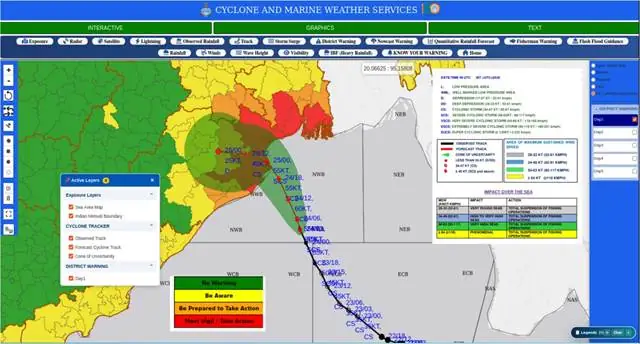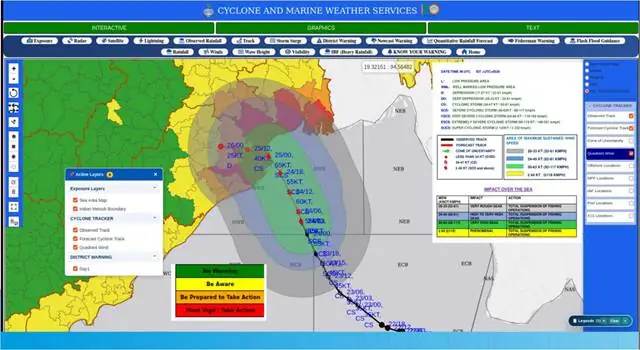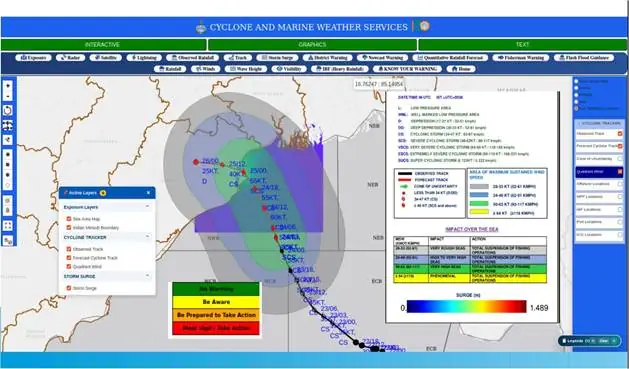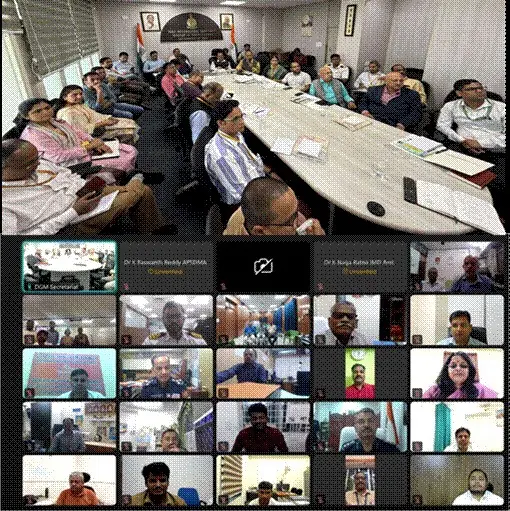
India has formally dedicated a new decision-support system aimed at improving cyclone warning capabilities and marine weather services, a move that underscores the government's push to modernize disaster forecasting and coastal risk management. The system, developed under the Indian Meteorological Department's operational framework, is intended to support faster and more informed decisions when severe weather threatens India's long coastline and densely populated coastal districts.
Forecasting Upgrade
The new platform is designed to integrate meteorological data, ocean conditions, and hazard assessment tools into a single operational environment. In practical terms, that means forecasters and decision-makers can evaluate evolving cyclone threats with greater speed and consistency, reducing the lag between scientific observation and public warning. For a country that regularly faces cyclones in the Bay of Bengal and the Arabian Sea, even modest gains in lead time can translate into better evacuation planning, safer port operations, and more effective emergency coordination.
The system's dedication comes at a time when climate variability and warming sea surface temperatures are intensifying the operational demands on weather agencies worldwide. India's coastal states have repeatedly experienced the destructive force of cyclonic storms, storm surges, and heavy rainfall events that disrupt transport, damage infrastructure, and threaten lives and livelihoods. By strengthening the forecasting chain, authorities are seeking to move from reactive response to anticipatory risk management.
Coastal Risk Management
Marine weather services are a critical but often underappreciated part of national safety architecture. Fishermen, port authorities, shipping operators, and coastal administrators depend on timely warnings about wind speed, wave height, sea state, and storm development. A dedicated decision-support system can help translate complex scientific inputs into operational guidance that is easier to act upon in the field.
This matters especially for small-scale fishing communities, which often operate with limited communication infrastructure and are among the most exposed to sudden weather shifts. Better marine advisories can help reduce accidental exposure at sea, support safer harbor closures, and improve the timing of rescue readiness. For commercial shipping and port logistics, improved forecast reliability can also reduce disruption and lower economic losses linked to weather-related stoppages.
The initiative also reflects a broader policy trend in India: the growing emphasis on technology-enabled governance in disaster management. Rather than relying solely on broad warnings, agencies are increasingly expected to deliver location-specific, impact-oriented alerts. That shift is consistent with global best practices in early warning systems, where the value of a forecast is measured not only by its scientific accuracy but by how effectively it informs decisions on the ground.
Policy and Preparedness
The dedication of the system is likely to be viewed as part of a wider national effort to strengthen resilience across vulnerable sectors. India's disaster management priorities have increasingly centered on preparedness, early warning dissemination, and inter-agency coordination. In that context, the new platform is more than a technical upgrade; it is a governance tool that can improve the state's ability to protect lives and economic assets.
The operational impact will depend on how seamlessly the system is embedded into routine forecasting workflows and how effectively warnings are communicated to state governments, district administrations, coastal communities, and maritime users. The strongest forecasting system has limited value if advisories do not reach the people who need them in time, or if local response mechanisms are not ready to act on them.
Still, the dedication signals an important institutional step. As extreme weather events become more frequent and more disruptive, India is investing in the digital and scientific infrastructure needed to respond with greater precision. The new cyclone warning and marine decision-support system is intended to give officials a sharper picture of risk, improve the quality of public advisories, and strengthen the country's overall preparedness for coastal emergencies.